
Living a Self-Sustainable Lifestyle: Realistic Steps
Editorial Team · on 17 June 2026 · 5 min read · Last reviewed 17 June 2026
Living a self-sustainable lifestyle means meeting your own needs, food, water, energy, from your immediate environment with minimal reliance on external systems.
Think of it like growing your own garden, but for your entire life: you plant seeds, nurture them, and harvest what you need, instead of buying everything from a store.
Key facts
- Self-sufficient households typically produce at least 50% of their food.
- Solar panels can reduce energy bills by up to 70%.
- Rainwater harvesting can supply up to 50% of household water needs.
- Composting diverts up to 30% of household waste from landfills.
Why living a self-sustainable lifestyle matters
Self-sufficiency isn’t about cutting yourself off from society, it’s about reducing your environmental footprint while gaining independence from volatile supply chains. The first time I really looked at my grocery receipts, I was shocked by how much of my spending went to food shipped from thousands of miles away. By growing even a portion of my own food, I cut costs and carbon emissions dramatically.
Living sustainably also builds resilience. When I visited my cousin’s off-grid homestead in rural Vermont, I saw firsthand how they rely on solar power, a well, and a greenhouse to stay self-sufficient year-round. Their setup isn’t perfect, but it’s far more reliable than depending on a power grid vulnerable to storms and outages.
How to grow your own food for self-sufficiency
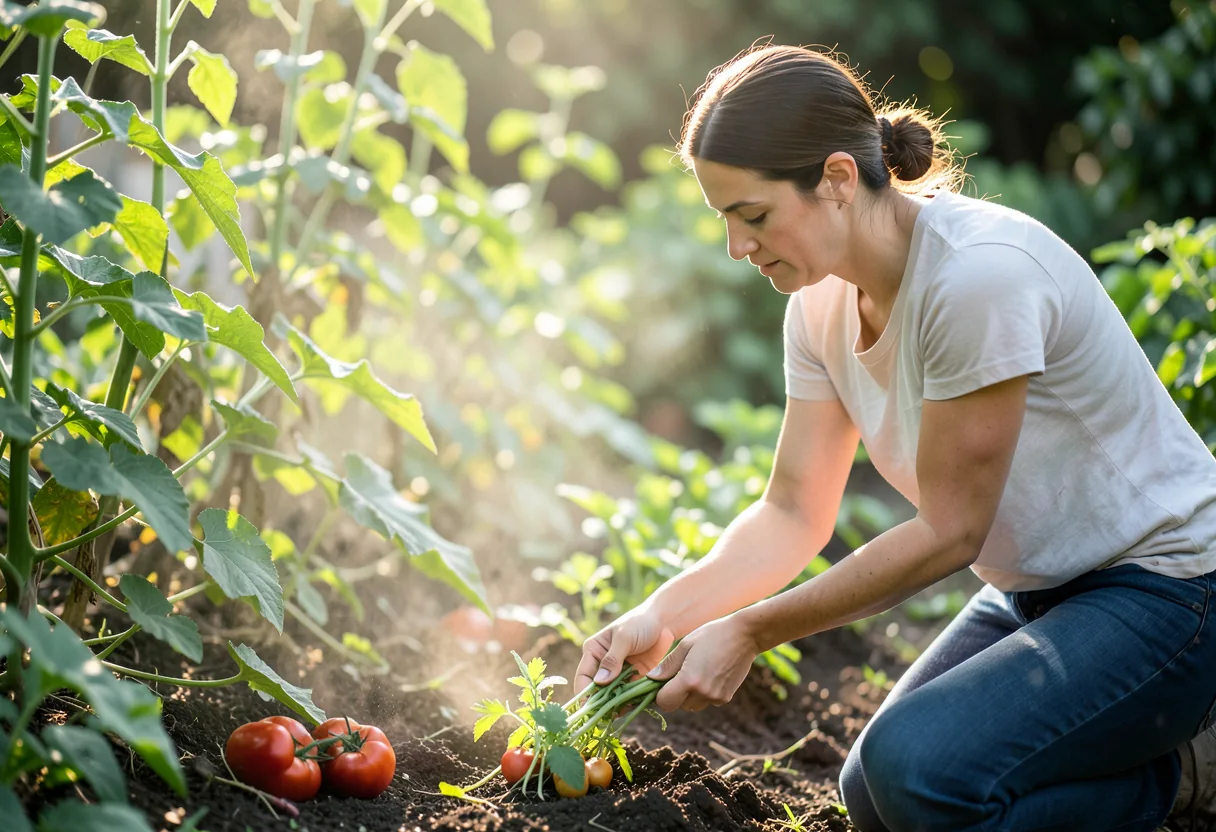
Start small: a few raised beds or containers on a patio can yield herbs, leafy greens, and cherry tomatoes. The key is to choose crops that thrive in your climate. For example, in the U.S. Pacific Northwest, kale and berries are low-maintenance staples, while in the Southwest, drought-resistant crops like peppers and okra perform better.
To maximize yield, practice succession planting. After harvesting early crops like radishes or spinach, sow fast-growing replacements like bush beans or zucchini. Composting turns kitchen scraps into nutrient-rich soil, closing the loop on waste. For a more structured approach, consider courses like offered by the University of California, Davis, which cover everything from soil health to pest management.
Energy independence for sustainable living
Solar power is the most accessible renewable energy source for most households. A 6 kW system, common for average homes, costs around $15,000 after tax incentives and can offset up to 70% of electricity use. Wind turbines are viable in rural areas with steady winds, but require more space and maintenance. For urban dwellers, small-scale wind turbines like the are an option, though they generate less power.
For off-grid living, pair solar panels with battery storage. The Tesla Powerwall, for example, stores 13.5 kWh of energy, enough to power essentials through a nighttime or cloudy day. Geothermal systems, while expensive upfront, provide consistent heating and cooling by tapping into the earth’s stable underground temperatures. The at Cornell University demonstrates how geothermal can work in diverse climates.
Water management for self-sufficient living
Rainwater harvesting systems can collect up to 600 gallons from a 1-inch rainfall on a 1,000-square-foot roof. Pair a collection barrel with a first-flush diverter to filter out roof debris, and you’ve got water for irrigation or even household use with proper filtration. The system at the project in Arizona shows how large-scale rainwater collection can work in arid climates.
For drinking water, well systems are reliable but require testing for contaminants like arsenic or nitrates. In urban areas, consider a countertop filtration system like the Big Berkey, which removes pathogens and chemicals without electricity. The guide from the Centers for Disease Control and Prevention (CDC) provides detailed advice on ensuring water safety.
Sustainable waste management practices
Composting transforms food scraps and yard waste into fertile soil. A simple bin or pile with equal parts greens (vegetable peels, grass clippings) and browns (dry leaves, cardboard) breaks down in 2-6 months. For apartment dwellers, vermicomposting with worms like Eisenia fetida processes waste indoors. The from the Environmental Protection Agency (EPA) offers step-by-step instructions for different composting methods.
Reduce plastic by swapping disposable items for reusable alternatives. Beeswax wraps, for instance, replace cling film for food storage, while bamboo toothbrushes avoid plastic waste. The Zero Waste Home movement popularized by Bea Johnson demonstrates how to minimize trash to a single mason jar per year. Johnson’s book provides practical tips for reducing waste in every aspect of life.
Off-grid living: Is it right for you?
Living entirely off-grid demands significant investment and lifestyle changes. The Earthship Biotecture community in New Mexico, for example, builds homes from recycled tires and bottles, using passive solar design for heating. Residents rely on rainwater catchment and composting toilets, proving it’s possible, but not without trade-offs. The website offers tours and workshops for those interested in this lifestyle.
Start with small steps: grow food, collect rainwater, or install solar panels. Gradually, you’ll build skills and infrastructure to increase self-sufficiency. The key is to balance independence with practicality, ensuring you can still access resources when needed. The blog by Mother Earth News provides real-life stories and tips from off-grid living enthusiasts.
Community and self-sufficiency
You don’t have to go it alone. Bartering skills and surplus produce with neighbors creates a resilient local network. Community-supported agriculture (CSA) programs, like those offered by farms such as Polyface Farm, connect consumers directly to farmers, reducing middlemen and waste. Polyface Farm, made famous by Joel Salatin, is a model for sustainable farming practices.
Join groups like the Tips for Sustainable Living to Start Today to share knowledge and resources. The more you collaborate, the easier it becomes to live sustainably without isolation. The on Reddit is a great place to ask questions and learn from others’ experiences.
Takeaway: Start with one sustainable practice, whether it’s composting or installing solar panels, and build from there. Small steps lead to big changes over time.
Frequently asked questions
What's the most practical way to start generating my own electricity?
Install a small solar panel system. A 400-watt setup costs around $400 and can power basic appliances. Place panels where they get 6-8 hours of direct sunlight daily. Battery banks store excess energy for nighttime. Check local regulations for permitting requirements.
How can I reduce my grocery bills by 50% through self-sufficiency?
Start with a 10×10-foot garden. Grow high-yield crops like tomatoes, lettuce, and zucchini. Preserve harvests through canning or freezing. Raise backyard chickens for eggs; two hens produce about 14 eggs weekly. Forage for wild edibles like dandelion greens or blackberries.
What's the simplest way to treat household wastewater?
Use a two-compartment septic tank. The first chamber separates solids via gravity, while the second allows further decomposition. Effluent flows to a drain field for natural filtration. Maintain your system by pumping the tank every 3-5 years. Avoid flushing non-biodegradable items.
How can I heat my home without relying on fossil fuels?
Install a wood-burning stove with an EPA certification like the Jotul F 602. Use seasoned hardwoods for maximum efficiency. Pair with a thermal mass heater for radiant heat storage. Insulate walls and windows to reduce heat loss. For larger spaces, consider a pellet stove with automatic feed systems.